
For boards facing a decision: continue, change form, or wind down
Ending well is possible, and now it is written down.
Public Benefit Canada is a stabilization practice and a publisher for Canada's charitable sector. Charitable Ends, the first of the Public Benefit Guides, is out now.

01Start here
Where do things stand?
Five words the practice uses. Pick the one that is closest, and the site will tell you where to go next.
01Steady
Good. Steady is the time to read this, not later. The Guide is written so a board can decide in good time, and the boards that end well are the ones that looked while nothing was wrong. Put it on the shelf in the boardroom now and it will be there the year it matters.
Read about the Guide02Stretched
Something important has to keep moving and the people who would normally move it cannot. A vacant role, a project drifting, a board holding more than a board can hold. That is the whole reason the practice exists. Tell us what is happening and roughly when, and you will get a clear answer either way.
The PracticeTell us what is happening03In transition
A merger on the table, programs moving to a neighbour, an amalgamation, a leadership change with a deadline attached. The Guide treats transfers, mergers, and amalgamations as their own roads rather than variations on closing, and the practice takes files like these.
The GuideThe Practice04Winding down
Then the order of things matters more than the speed. Some deadlines in a wind-down do not move, and a few start running before anyone notices. The Guide carries the whole critical path from the first hard conversation to the last filing, and where a board has already committed to winding down, the Coordinator's Toolkit costs nothing.
The GuideStart a conversation05Not attached
The accountant, the lawyer, or the retired administrator every board in town calls first, who does one of these files a year as a kindness. Or someone who simply wants to know how public good is wound up in this country, and by whom. The Guide was written with you in mind too, and the Primer, when it is ready, is free and made to be handed on.
The GuideAbout the company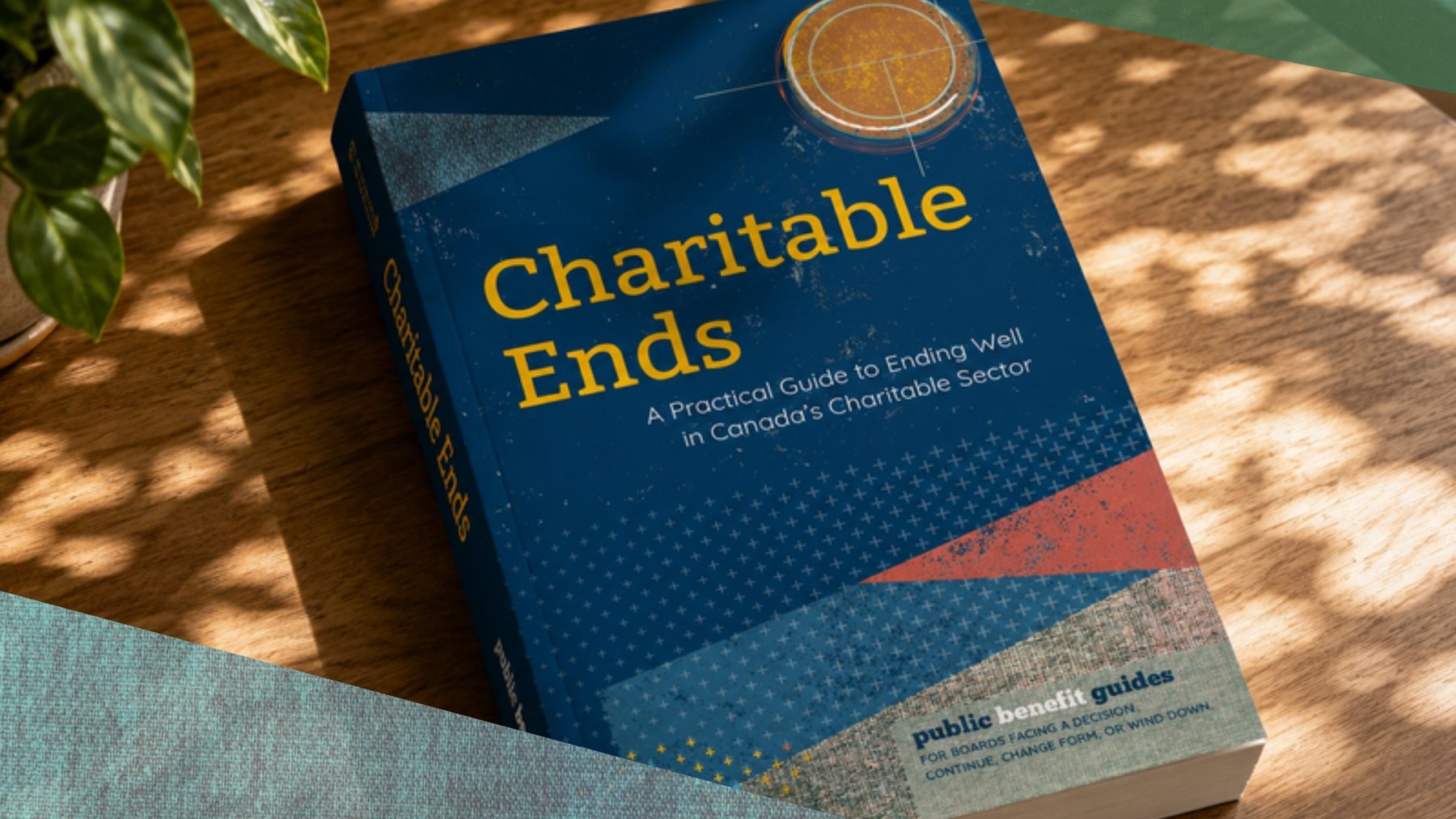
02The Guide
Charitable Ends
Three hundred and six pages on how a Canadian charity or not-for-profit closes, transfers, merges, or amalgamates, written for the board that has to decide and the coordinator who has to carry it out.
A charity lawyer reviewed it on the eight questions that carried the most risk. A retired insolvency trustee read the insolvency chapter. Its sources were confirmed through 24 August 2026, and that date is printed in the book.
03The Practice
A stabilization practice.
We take on work that has to keep moving when an organization is stretched: a vacant role, a project drifting, a board holding more than a board can hold. Some of that is a beginning, some of it is repair, and some of it is an ending. The ending is the one nobody is trained for.
We wrote the Guide because directors are the scarce thing in this sector, not money. A volunteer who has to make a hard decision deserves what a paid professional would get, and until now they have had to assemble it themselves, in the evenings, out of fragments.
04Next in the series
All Means
What every way of raising money will cost you.
On the promise, the report, and the change in what an organization is willing to do that comes attached to every dollar. In preparation, with no date yet, for a reason the page explains.
About All Means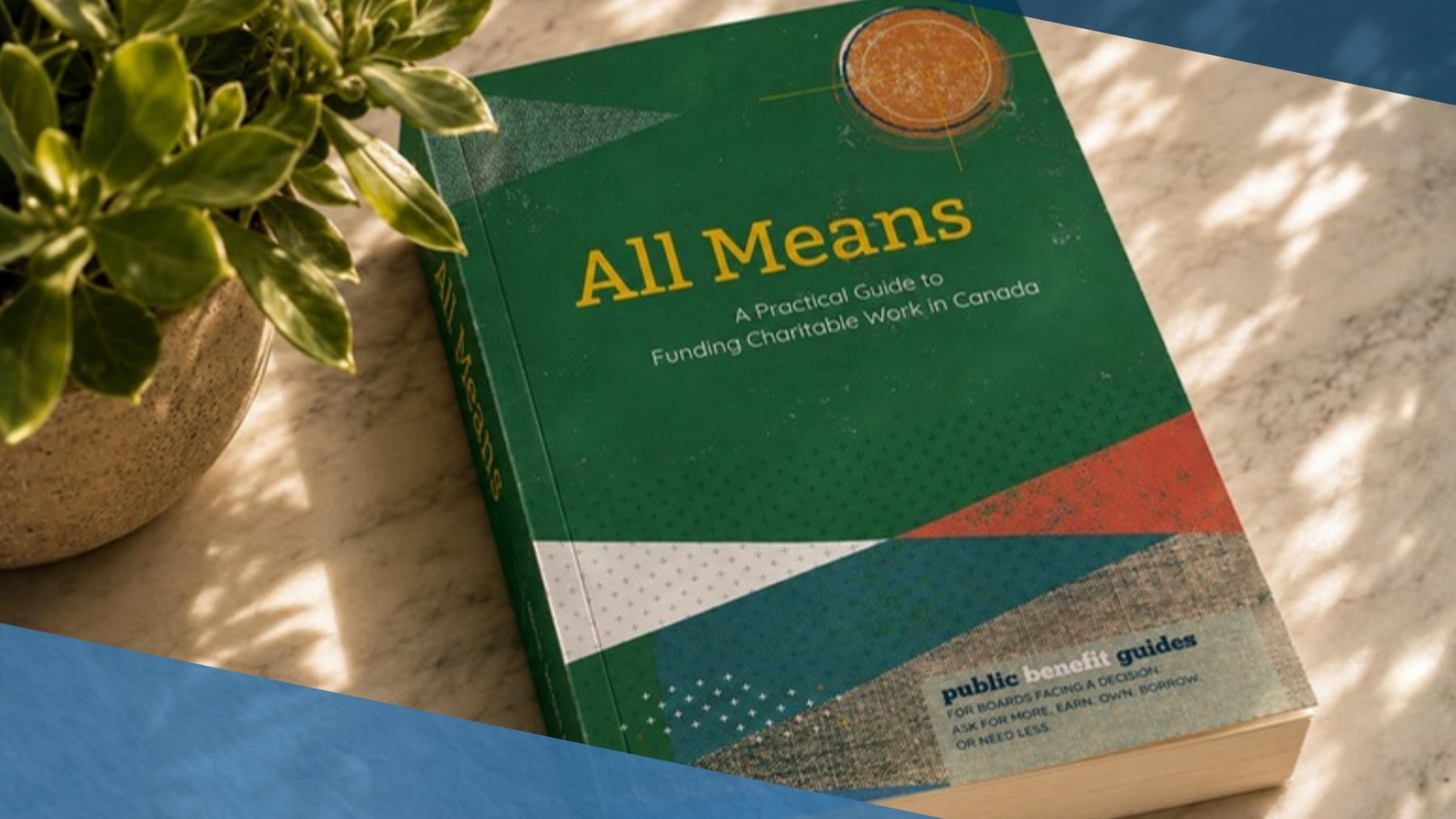
Hear from us when it is worth your time
One list.
We write when there is something to say, and not otherwise: a new Guide, the free Primer when it is ready, a course when it exists. No schedule, no volume.
One email, no form. Reply and we add you.
Start a conversation.
Tell us what is happening and roughly when. We will tell you whether this is a fit, and you will get a clear answer either way.